Artificial Intelligence
A four-year B.Tech programme under APJ Abdul Kalam Technological University, teaching machine intelligence alongside the defensive discipline that has to contain it.
B.Tech
60
8 semesters

About the Department
The Department offers undergraduate programmes in B.Tech. Artificial Intelligence and Data Science (AI&DS) and B.Tech. Computer Science and Engineering (Cyber Security) under the affiliation of APJ Abdul Kalam Technological University. The Programmes started in the year 2021 under the department of Computer Science and Engineering and started to function as a separated department in the year 2022.
Today’s competitive era demands creativity and innovation to be imbibed in the professionals at the under graduate level. The Department has adopted modern practices to enrich the thought process of students with creativity and innovation. The goal of the department is to nurture the academic as well as personal excellence of our students by providing student centric learning, industry exposure and outstanding career opportunities.
Backbone of the department comprises a crew of well experienced, highly qualified and dedicated team who are always enthusiastic to update their knowledge. The department aims to buildup a community where the actionable insights and cutting-edge technology turn into innovative products towards solving real-world problems.
120
Intake14
Faculty6
Laboratories92%
PlacementVision & Mission
To mould socially committed industry ready engineers who envisions a future where AI and cyber security work hand in hand to create a secure, ethical, and technologically advanced digital environment through quality education, innovative research and industry collaboration
Promote learning through visualization, hands on experience, value added course and well-timed information.
Encourage socio-centric project that leverage AI and Cyber security to address societal challenges, and drive positive social impact by promoting ethical and responsible practices.
To impart industrial collaboration by inculcating industrial training, industry-related project works, and interaction with industry professionals.
HOD's Message
Portrait, name and designation, then the message. Keep it to three short paragraphs.
Replace this Rich Text element with the section content. Keep paragraphs short, use an H3 for each sub-heading, and separate blocks with the 2px rule.
Programme Educational Objectives (PEOs)
PEO 1
Establish the graduates with strong foundation skills in Al and Cyber Security domains and foster them as good problem solvers and critical thinkers.
PEO 2
Enables the graduates to solve the real world challenges in multi-disciplinary areas.
PEO 3
Graduates will embrace a commitment to lifelong learning, staying updated with emerging trends and advancements to enhance their knowledge and skills.
Program Outcome (POs)
PO 1
Engineering Knowledge: Apply the knowledge of mathematics, science, engineering fundamentals, and an engineering specialization to the solution of complex engineering problems. (Level 3)
PO 2
Problem Analysis: Identify, formulate, review research literature, and analyze complex engineering problems reaching substantiated conclusions using first principles of mathematics, natural sciences, and engineering sciences. (Level 6)
PO 3
Design/Development of Solutions: Design solutions for complex engineering problems and design system components or processes that meet the specified needs with appropriate consideration for the public health and safety, and the cultural, societal, and environmental considerations. (Level 6)
PO 4
Conduct Investigations of Complex Problems: Use research-based knowledge including design of experiments, analysis and interpretation of data, and synthesis of the information to provide valid conclusions. (Level 5)
PO 5
Modern Tool Usage: Create, select, and apply appropriate techniques, resources, and modern engineering and IT tools including prediction and modeling to complex engineering activities with an understanding of the limitations. (Level 6)
PO 6
The Engineer and Society: Apply reasoning informed by the contextual knowledge to assess societal, health, safety, legal, and cultural issues and the consequent responsibilities relevant to the professional engineering practice. (Level 5)
PO 7
Environment and Sustainability: Understand the impact of the professional engineering solutions in societal and environmental contexts, and demonstrate the knowledge of, and need for sustainable development. (Level 3)
PO 8
Ethics: Apply ethical principles and commit to professional ethics and responsibilities and norms of the engineering practice. (Level 3)
PO 9
Individual and Team work: Function effectively as an individual, and as a member or leader in teams, and in multidisciplinary settings. (Level 3)
PO 10
Communication: Communicate effectively with the engineering community and with society at large. Be able to comprehend and write effective reports documentation. Make effective presentations, and give and receive clear instructions. (Level 6)
PO 11
Project Management and Finance: Demonstrate knowledge and understanding of engineering and management principles and apply these to one’s own work, as a member and leader in a team. Manage projects in multidisciplinary environments. (Level 5)
PO 12
Life-long Learning: Recognize the need for, and have the preparation and ability to engage in independent and lifelong learning in the broadest context of technological change. (Level 5)
Curriculum & Syllabus
The department follows the KTU B.Tech curriculum. Students admitted up to 2023 study the 2019 regulation; from the 2024 intake onward the revised scheme applies.
Common engineering core
AI foundations, networks
Security electives, mini project
Main project, internship
Departmental Advisory Committee
Members, designation and organisation — use the people-grid or the table pattern.
Replace this Rich Text element with the section content. Keep paragraphs short, use an H3 for each sub-heading, and separate blocks with the 2px rule.
Programme Assessment Committee
Members and their role in the assessment cycle.
Replace this Rich Text element with the section content. Keep paragraphs short, use an H3 for each sub-heading, and separate blocks with the 2px rule.
Stream Coordinators
Coordinator per stream with contact details.
Replace this Rich Text element with the section content. Keep paragraphs short, use an H3 for each sub-heading, and separate blocks with the 2px rule.
Faculty Advisors
Advisor per batch and semester.
Replace this Rich Text element with the section content. Keep paragraphs short, use an H3 for each sub-heading, and separate blocks with the 2px rule.
Industrial Interactions
Guest lectures, industrial visits and internship partners — the card-grid pattern.
Replace this Rich Text element with the section content. Keep paragraphs short, use an H3 for each sub-heading, and separate blocks with the 2px rule.
Laboratories
AI & Deep Learning Lab
GPU workstations for model training, running the machine learning and neural network courses from semester five.
Cyber Security Lab
Isolated network segment for penetration testing, forensics and cryptography practicals.
Data Analytics Lab
Statistical computing and visualisation environment shared with allied programmes.
Networking Lab
Routers, switches and virtual topologies for the networks and protocols sequence.
Department Library
Volumes, journals and digital access.
Replace this Rich Text element with the section content. Keep paragraphs short, use an H3 for each sub-heading, and separate blocks with the 2px rule.
Classrooms & Seminar Hall
Capacity, AV facilities and photographs.
Replace this Rich Text element with the section content. Keep paragraphs short, use an H3 for each sub-heading, and separate blocks with the 2px rule.
Publications
Year, authors, title, journal — the table pattern, newest first.
Replace this Rich Text element with the section content. Keep paragraphs short, use an H3 for each sub-heading, and separate blocks with the 2px rule.
Projects
Agency, principal investigator, amount and duration.
Replace this Rich Text element with the section content. Keep paragraphs short, use an H3 for each sub-heading, and separate blocks with the 2px rule.
Patents
Application number, title, inventors and status.
Replace this Rich Text element with the section content. Keep paragraphs short, use an H3 for each sub-heading, and separate blocks with the 2px rule.
Department Association
Office bearers and the year’s activity calendar.
Replace this Rich Text element with the section content. Keep paragraphs short, use an H3 for each sub-heading, and separate blocks with the 2px rule.
Events
Workshops, seminars and technical fests — card grid with date and a photograph.
Replace this Rich Text element with the section content. Keep paragraphs short, use an H3 for each sub-heading, and separate blocks with the 2px rule.
Achievements
Student and faculty achievements, newest first.
Replace this Rich Text element with the section content. Keep paragraphs short, use an H3 for each sub-heading, and separate blocks with the 2px rule.
Newsletter's
Point each row at the media file, or drive the whole list from an ACF repeater.
Magazine
Point each row at the media file, or drive the whole list from an ACF repeater.
Handouts
Point each row at the media file, or drive the whole list from an ACF repeater.
HOD's Desk
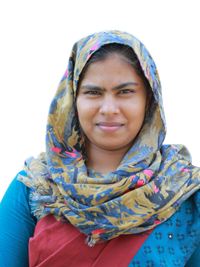
Dr. Rosna P Haroon
Professor & Head
Department of Artificial Intelligence & Cyber Security
View Profile →Welcome to the Department of Artificial Intelligence and Cyber Security. Our department is dedicated to fostering academic excellence, innovation, and ethical values among students. We focus on providing a strong foundation in emerging technologies along with practical exposure and research-oriented learning.
With a well-structured curriculum, experienced faculty members, modern laboratories, and active industry interactions, the department ensures that students are equipped with the necessary technical skills and professional competence to meet industry and societal demands.
The department also emphasizes mentoring, outcome-based education, and continuous academic monitoring to support the holistic development of students. Various workshops, seminars, internships, and research activities are conducted regularly to enhance the knowledge and employability of our students.
We strive to create competent engineers and responsible professionals who can contribute effectively to technological advancement and societal development.Here goes your text … Select any part of your text to access the formatting toolbar.
Regular Faculty
Technical Faculty
No faculty found.